The highlights you came to see
The works are listed in the optimized route order. We recommend following the indicated sequence to minimize walking.
1 · 10 min
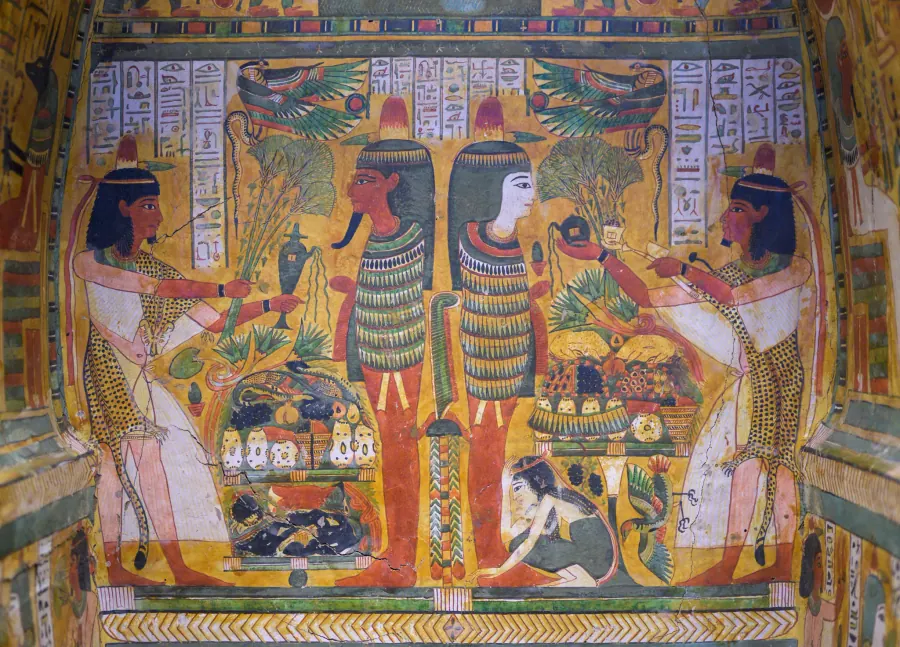
Gregorian Egyptian Museum
Gregorian Egyptian Museum, Rooms I–IX
The Gregorian Egyptian Museum reveals both ancient Egyptian culture and the modern history of collecting it in Rome. Pharaonic works, Roman Egyptian imagery and nineteenth-century museum practice make the galleries a study of reception as well as antiquity.
2 · 10 min
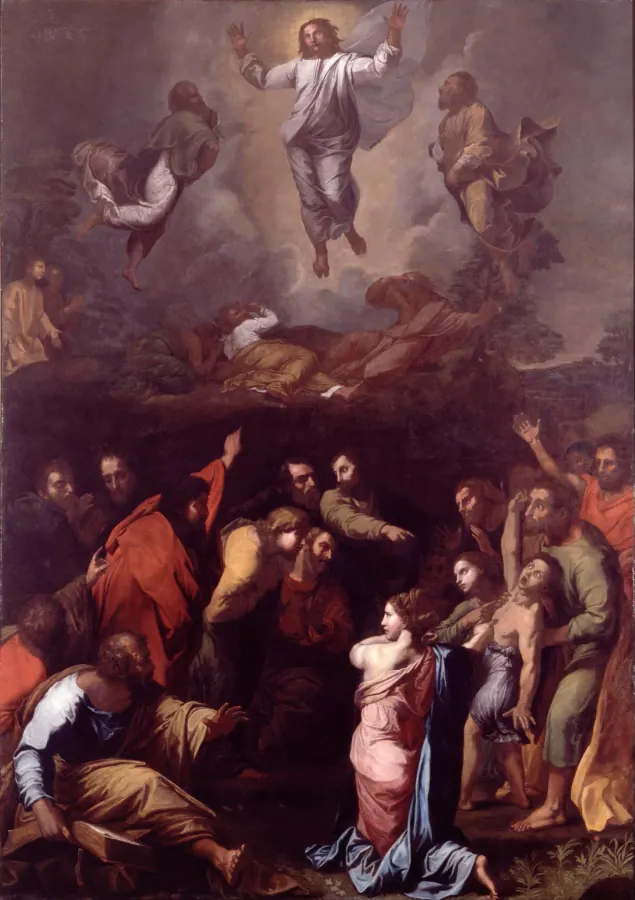
The Transfiguration
Room VIII, Pinacoteca Vaticana
Raphael's final painting unites radiant revelation above with human confusion below. Its unprecedented combination of two Gospel episodes became a model for dramatic altarpieces and a testament to an artist whose late work was still expanding in scale and emotional range.
3 · 10 min
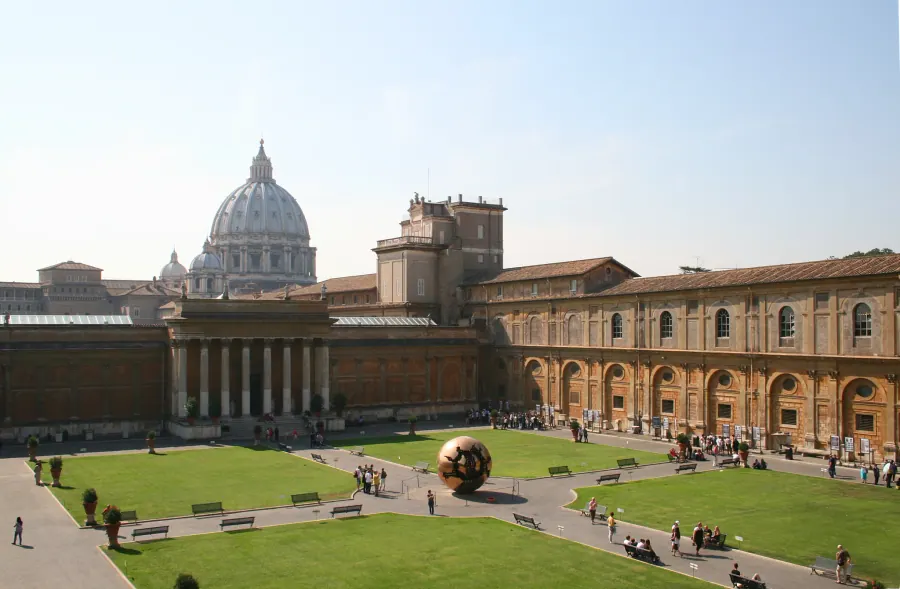
Pinecone Courtyard
Courtyard of the Pinecone
The Courtyard of the Pinecone condenses two millennia of reuse. An ancient Roman fountain element, medieval Saint Peter's, Renaissance Belvedere architecture and modern museum circulation meet in one open space.
4 · 10 min
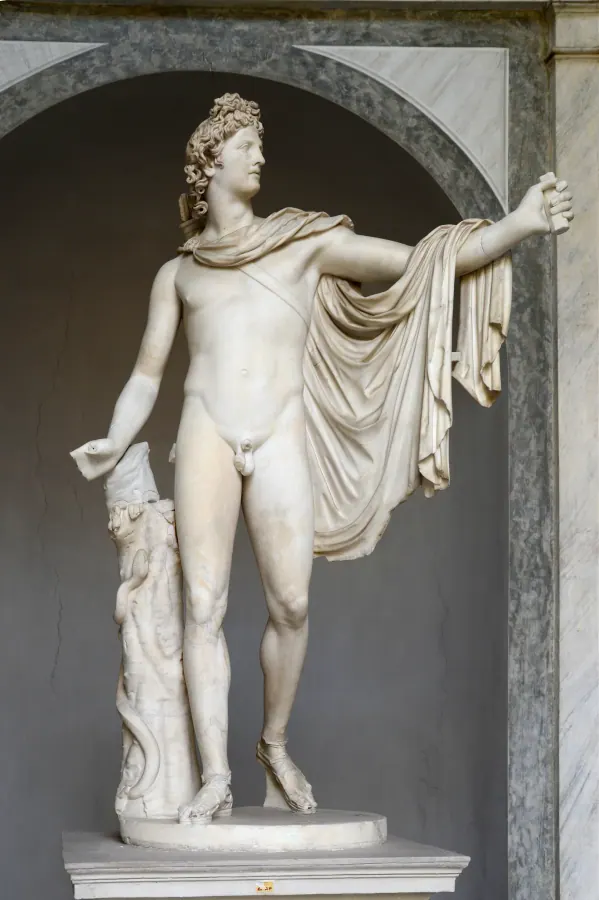
Apollo Belvedere
Octagonal Court, Pio Clementino Museum
For centuries the Apollo Belvedere served as a model of ideal beauty and noble action. Its fame shaped European academies and collecting, while recent conservation has made the statue equally important as a case study in the physical vulnerability of restored ancient marble.
5 · 10 min
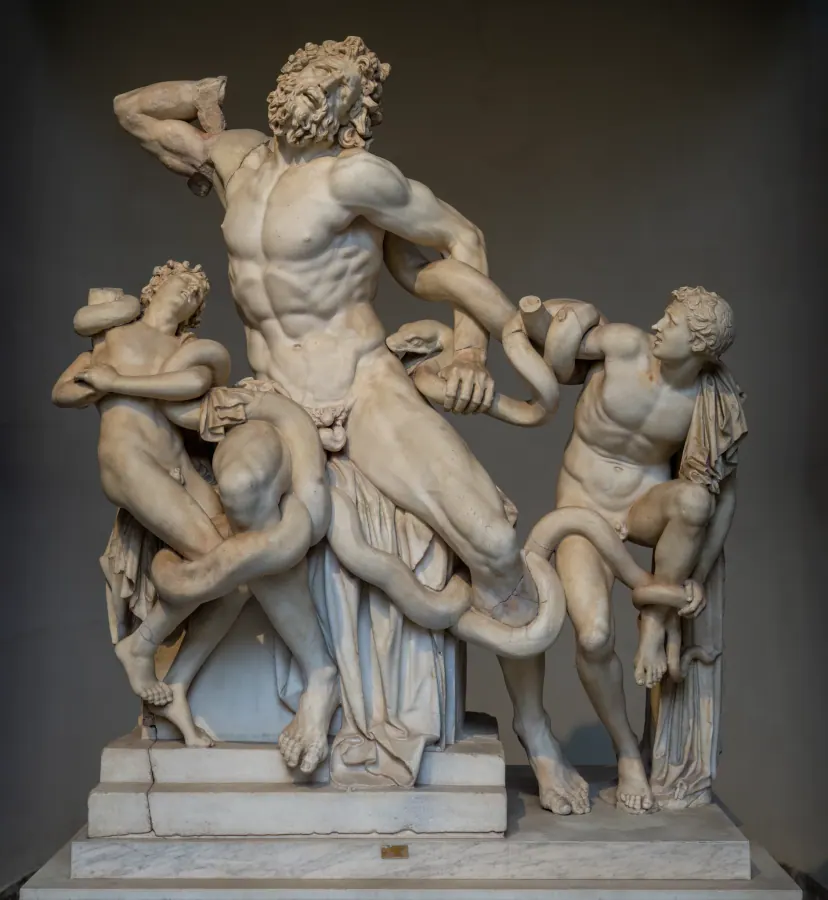
Laocoön and His Sons
Octagonal Court, Pio Clementino Museum
The Laocoon became a foundation stone of the papal antiquities collection and a benchmark for representing pain in the human body. Its discovery in 1506 changed Renaissance art while its restorations reveal how every generation reconstructs antiquity differently.
6 · 10 min
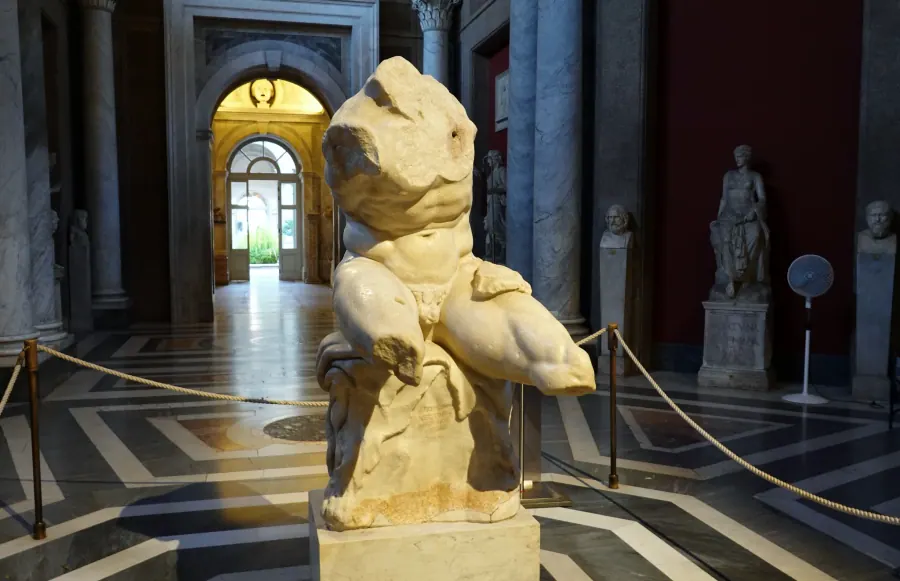
Belvedere Torso
Hall of the Muses, Pio Clementino Museum
The Belvedere Torso taught Renaissance artists that a fragment could be more generative than a completed body. Its compressed anatomy influenced Michelangelo and generations after him, while its missing parts keep interpretation visibly provisional.
7 · 10 min
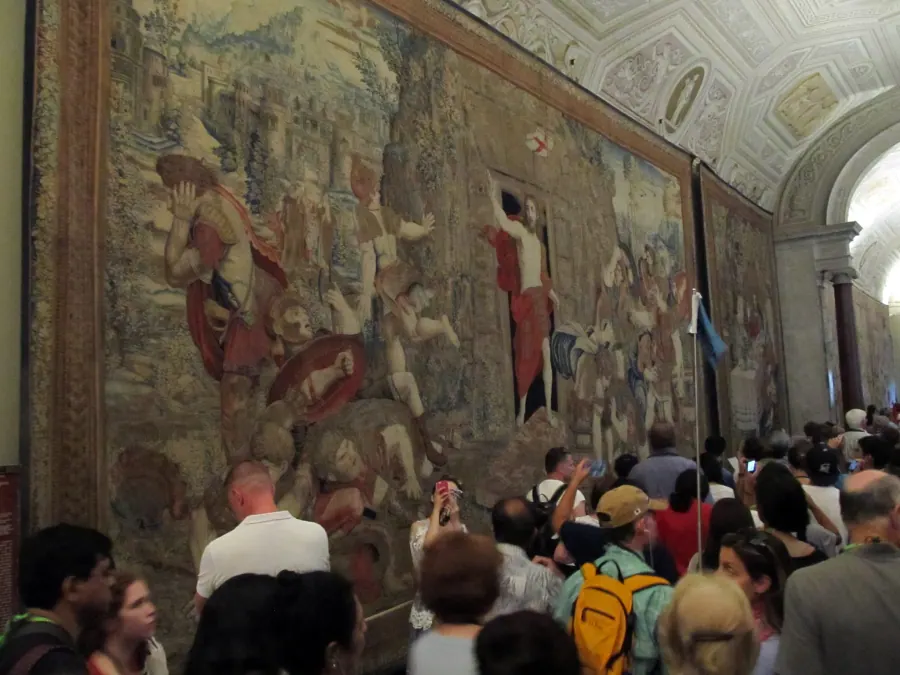
Gallery of Tapestries
Gallery of the Tapestries
The gallery preserves monumental images made not with paint but with interlaced dyed threads. Its tapestries reveal the papal court's international networks, the prestige of Raphael's school and the political and liturgical mobility of woven art.
8 · 10 min
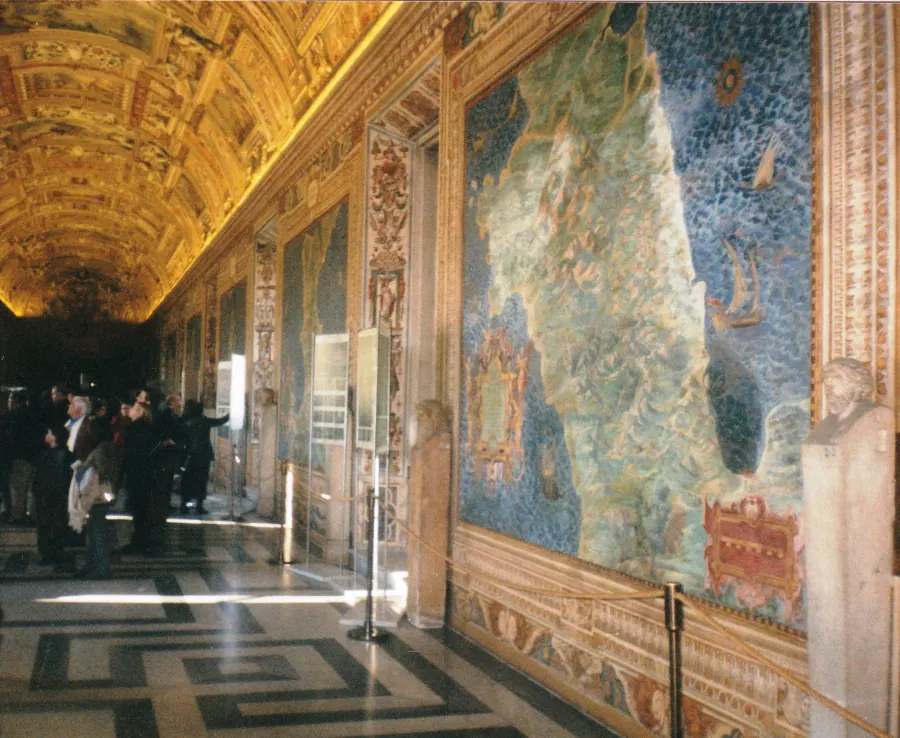
Gallery of Maps
Gallery of the Geographical Maps
The Gallery of Maps is a sixteenth-century vision of Italy assembled before political unification. Cartography, Church history and papal architecture combine to turn geographic knowledge into a spectacular walk through territory and time.
9 · 10 min
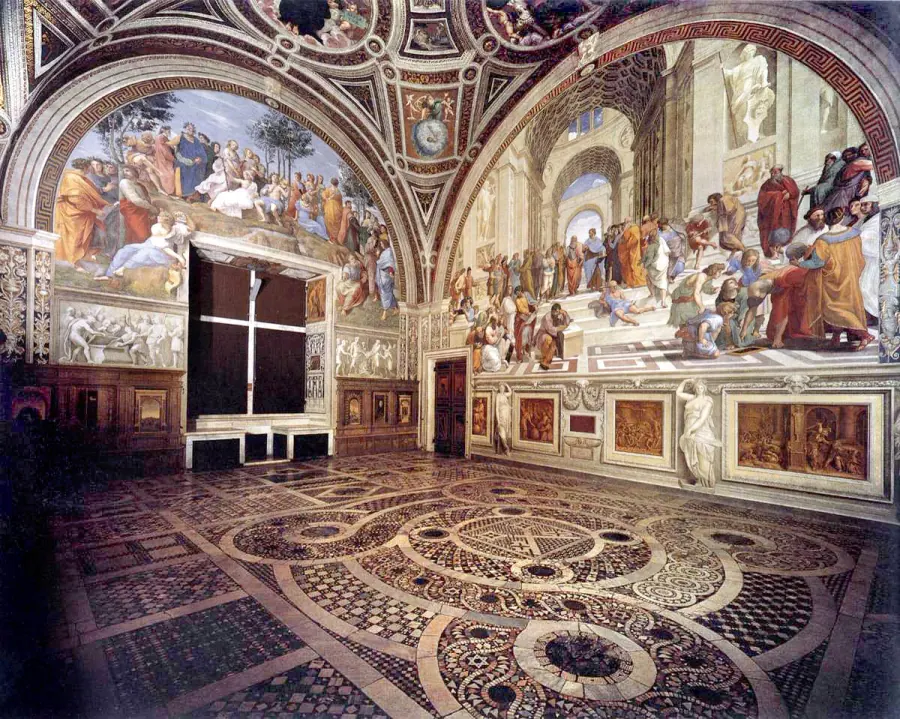
Raphael Rooms
Raphael’s Rooms, second floor of the Pontifical Palace
The four Raphael Rooms turned a papal apartment into a unified statement about knowledge, divine protection, Church history and political authority. They also reveal the growth of Raphael's workshop from personal invention to a collaborative enterprise continued after his death.
10 · 10 min
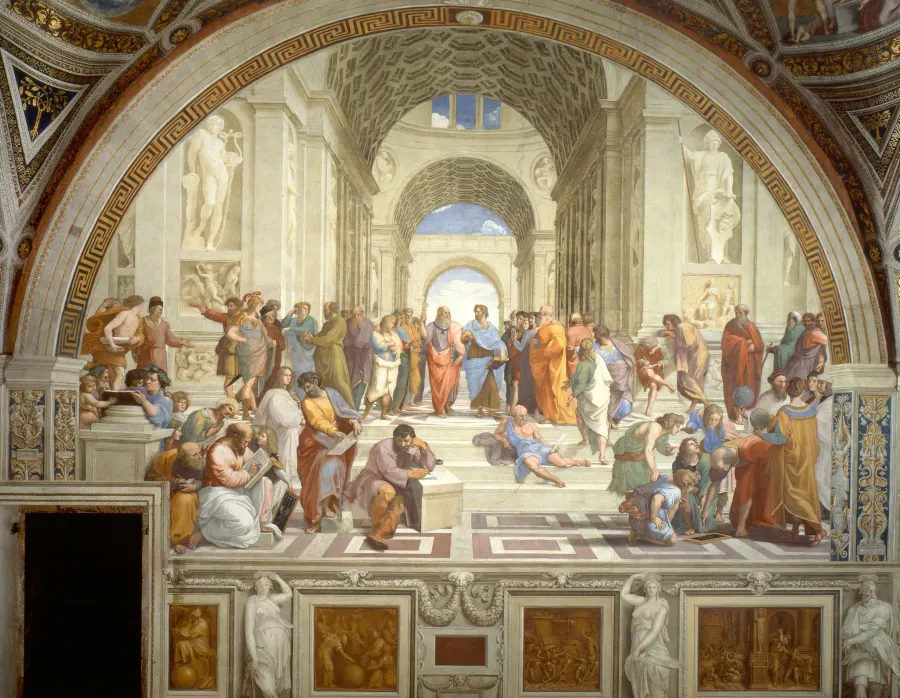
The School of Athens
Room of the Segnatura, Raphael’s Rooms
Raphael made philosophy visible as a community of argument, teaching and investigation. The fresco became an emblem of Renaissance humanism because ancient thinkers inhabit a modern architectural vision while retaining distinct methods and temperaments.
11 · 10 min
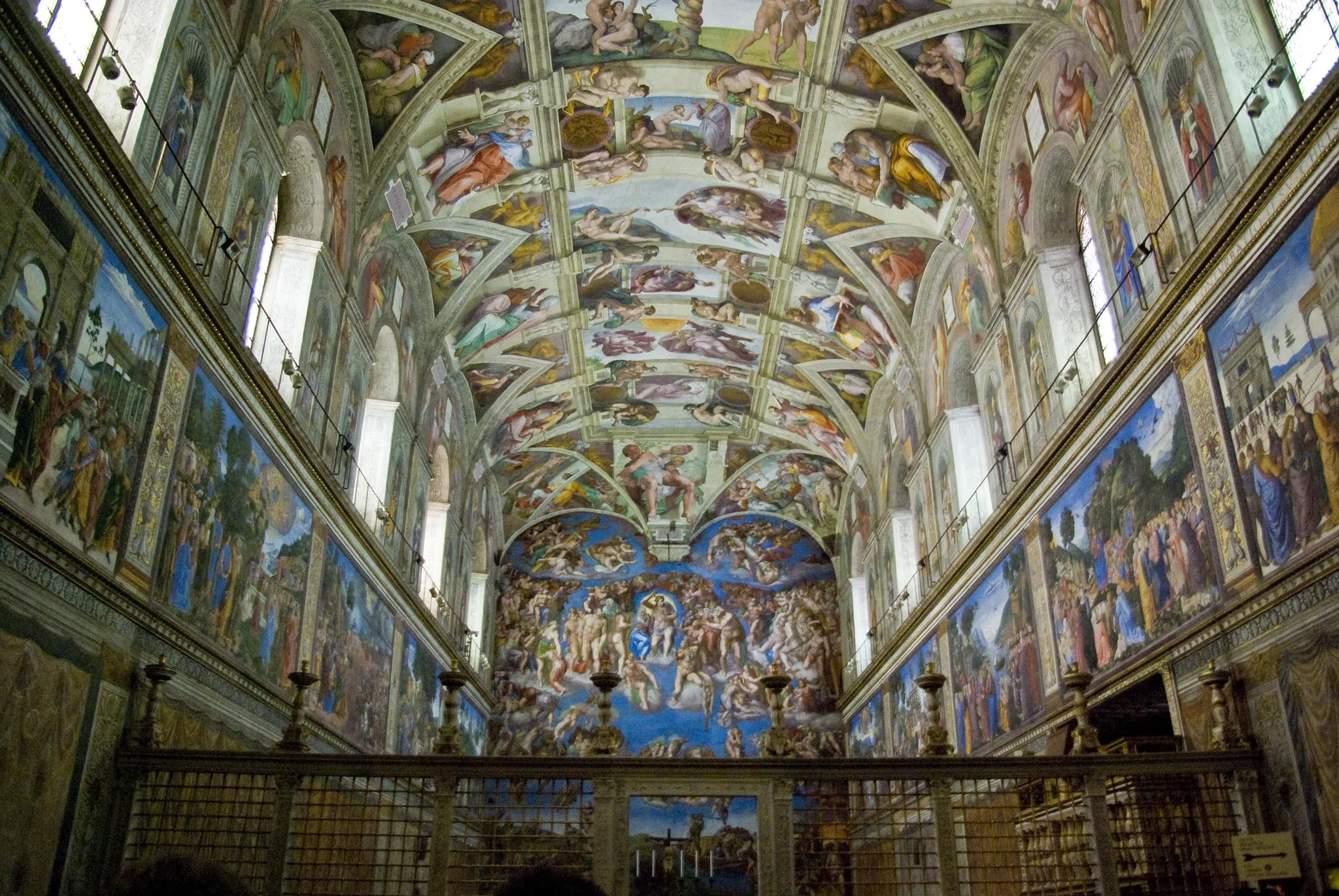
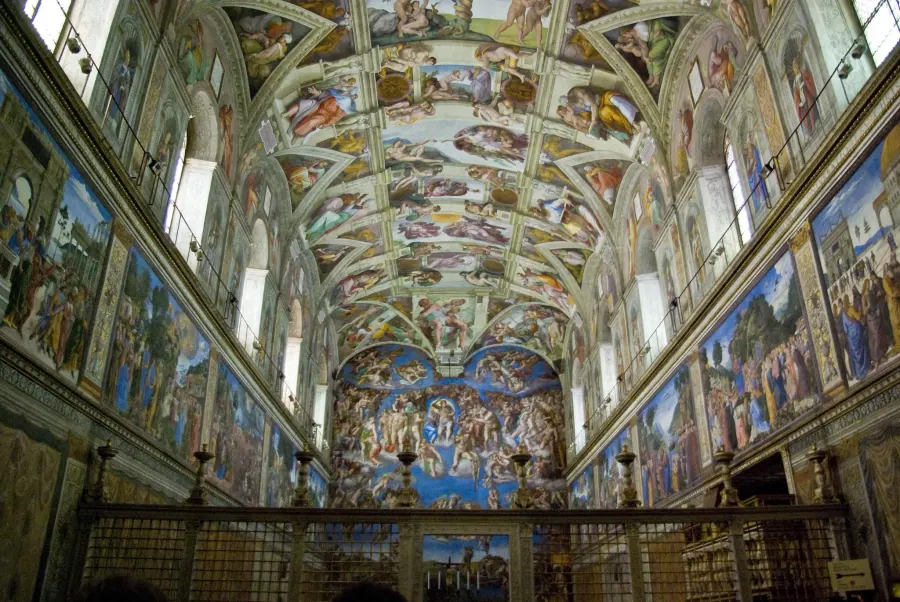
Sistine Chapel
Sistine Chapel
The Sistine Chapel is simultaneously a consecrated papal chapel, the setting of the conclave and one of the most ambitious painted environments ever created. Its power comes from the interaction of architecture, liturgy and several generations of Renaissance artists.
12 · 10 min
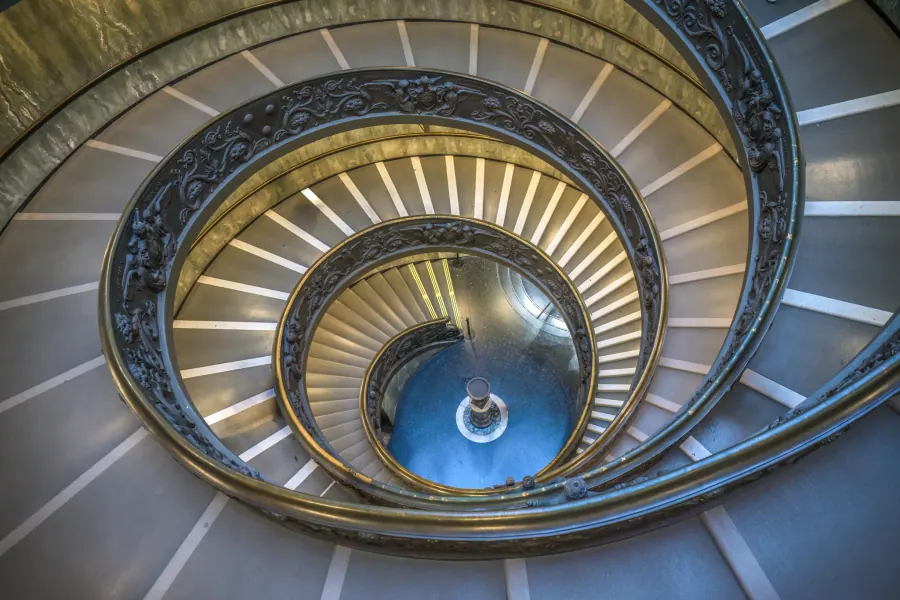
Bramante Staircase
Giuseppe Momo spiral staircase, museum exit
Giuseppe Momo's 1932 double spiral turns circulation into ceremony. Often confused with Bramante's earlier ramp, it belongs to the modern history of the Vatican Museums and shows how twentieth-century architecture managed visitors while invoking Renaissance precedent.
2 HOURS · 10 LANGUAGES · OFFLINE
Everything you need for a focused visit
Follow a curated route
Listen to the audio guide
Read descriptions in your language
Audio guide in your language
Works fully offline
Free to use
Available in 10 languages
How it works
- 1Download the guide
- 2Choose your language
- 3Keep track of your progress
- 4Start the 2-hour tour
- 5Follow each stop
- 6Listen and read in your language
NO SIGNAL? NO PROBLEM.
Works completely offline
After purchase, download the audio guide language you need. The route, written descriptions, progress and badges stay available inside the museum.
Frequently asked questions
Is the app free?
Yes. The app is free to download and use for the route and written guide. The audio guide is available as a one-time in-app purchase for 2.99 EUR.
Does it work offline?
Yes. The written guide stays available offline after installation. Audio can be downloaded by language after the 2.99 EUR in-app purchase.
Is it an official museum app?
No. This is an independently created visitor guide and is not affiliated with, endorsed by or sponsored by the museum unless explicitly stated.
How long does the tour take?
The curated route is designed to cover the essential highlights in about two hours, although you can pause or spend longer at any stop.
Do I need internet inside the museum?
No. The content needed for the visit is available offline, so poor reception or unavailable museum Wi-Fi will not interrupt the tour.
Does the app include audio?
Yes. Every stop can include audio. The written guide is free, while audio playback is unlocked with the 2.99 EUR in-app purchase.
Are descriptions and audio available in my language?
Yes. The written descriptions use the language selected in the app. After purchase, you can download the audio guide in any supported language.
Which languages are supported?
The guide supports English, Italian, French, Spanish, German, Portuguese, Dutch, Japanese, Chinese and Korean, including both text and audio.
Vatican Museums
Ready to see the highlights?
Descriptions and audio guide in your language.